
Navratri is one of the most sacred festivals in Hindu tradition, celebrated with devotion, fasting, and spiritual practices for nine days. During this period, devotees worship Goddess Durga and her nine divine forms, seeking blessings for prosperity, health, and spiritual growth.
Fasting during Navratri is not only a religious practice but also a powerful method of physical detoxification and mental discipline. Devotees follow specific dietary rules known as Navratri fasting rules, which involve eating satvik foods and avoiding certain ingredients considered tamasic or impure.
Following a proper Navratri fasting diet helps maintain energy levels during the fast while supporting the body’s natural detox process. Traditional Navratri vrat recipes are designed to be light, nutritious, and spiritually pure.
In this comprehensive guide, you will learn everything about Navratri fasting rules, foods allowed during Navratri fast, foods to avoid during Navratri, Navratri fasting benefits according to Ayurveda, and tips for maintaining a healthy Navratri fasting diet.
Table of Contents
ToggleWhy Do People Fast During Navratri?
Fasting during Navratri has deep spiritual and cultural significance. According to Hindu tradition, fasting is a way to purify the body and mind and focus on spiritual practices.
The word “Upvas”, which means fasting, literally translates to “staying close to the divine.” By reducing food intake and following a satvik diet, devotees aim to control desires and cultivate discipline.
Navratri fasting serves three main purposes:
Spiritual purification – Devotees dedicate time to prayer and meditation.
Mental discipline – Fasting helps develop control over the senses.
Physical detoxification – A lighter diet allows the digestive system to rest.
Many people also observe fasts to seek blessings for family well-being, prosperity, and protection from negative energies.
Navratri Fasting Rules
There are several traditional Navratri fasting rules that devotees follow during the nine days of the festival. These rules vary slightly depending on regional customs and personal beliefs.
However, the basic principles remain the same.
Eat Only Satvik Food
Satvik food is considered pure, light, and spiritually uplifting. The Navratri fasting diet mainly includes fruits, dairy products, and special fasting grains.
Avoid Regular Grains
Foods made with wheat flour, rice, or lentils are usually avoided during Navratri fasting.
Use Rock Salt Instead of Regular Salt
During Navratri fasting, regular salt is replaced with sendha namak (rock salt), which is considered pure and suitable for fasting.
Maintain Spiritual Discipline
Fasting is not only about food restrictions but also about maintaining purity of thoughts and actions.
Foods Allowed During Navratri Fast
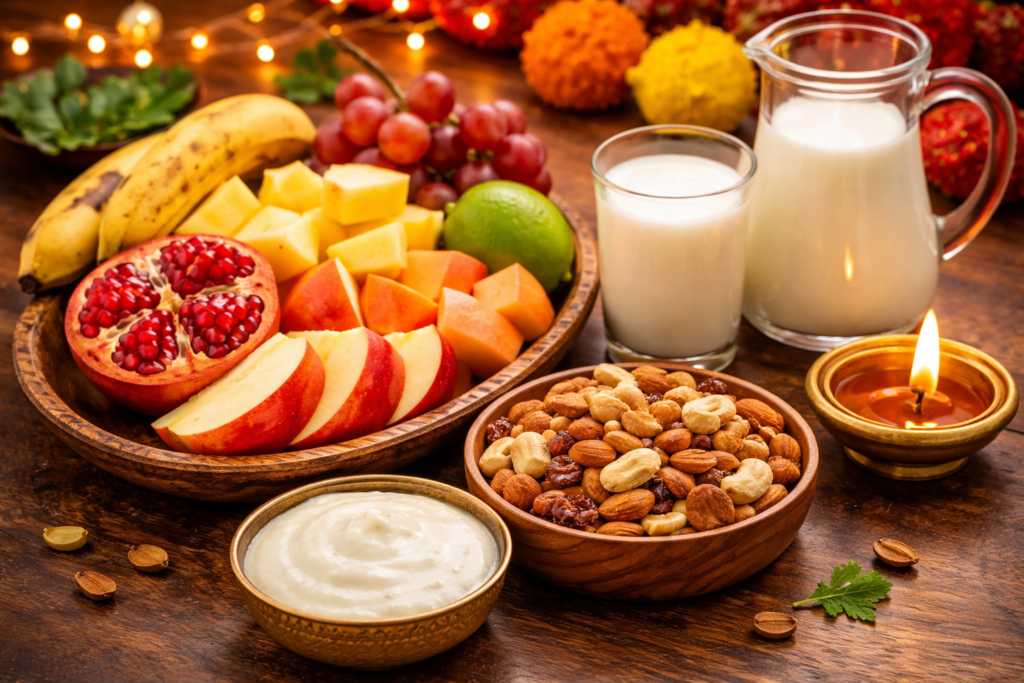
Understanding the foods allowed during Navratri fast is essential for following the fast properly.
Here are some commonly consumed fasting foods:
Fruits and Fresh Juices
Fruits are an important part of the healthy Navratri fasting diet because they provide natural energy and hydration.
Popular fruits during fasting include:
bananas
apples
papayas
pomegranates
oranges
Fresh fruit juices are also widely consumed.
Dairy Products
Milk and dairy products are commonly consumed during Navratri fasting.
These include:
milk
yogurt
paneer
buttermilk
Dairy products provide protein and help maintain energy during fasting.
Fasting Grains and Flours
Certain grains and flours are permitted during Navratri fasting.
These include:
buckwheat flour (kuttu atta)
water chestnut flour (singhara atta)
amaranth flour (rajgira atta)
sabudana (tapioca pearls)
These ingredients are widely used in Navratri vrat recipes.
Nuts and Dry Fruits
Dry fruits are a great source of energy during fasting.
Commonly consumed options include:
almonds
cashews
walnuts
raisins
They provide healthy fats and help prevent weakness.
Potatoes and Sweet Potatoes
Potatoes are widely used in fasting dishes.
They are often cooked with mild spices and rock salt.
Sweet potatoes are also popular because they are nutritious and easy to digest.
Foods to Avoid During Navratri
Knowing the foods to avoid during Navratri is equally important to follow fasting rules correctly.
Grains and Lentils
The following foods are generally avoided:
wheat flour
rice
lentils
chickpeas
These foods are considered unsuitable for fasting.
Onion and Garlic
Onion and garlic are avoided during Navratri because they are considered tamasic foods, which may disturb mental calmness.
Non-Vegetarian Food
Meat, fish, and eggs are strictly avoided during Navratri fasting.
Processed and Packaged Foods
Highly processed foods are discouraged because they contain additives and preservatives.
Alcohol and Tobacco
These substances are completely prohibited during Navratri fasting.
Healthy Navratri Fasting Diet
Maintaining a healthy Navratri fasting diet is essential for staying energetic throughout the nine days.
Here are some helpful tips:
Eat Small Meals Frequently
Instead of eating large meals, consume smaller portions throughout the day.
Stay Hydrated
Drink plenty of water, coconut water, and fresh juices.
Include Protein-Rich Foods
Foods like paneer, yogurt, and nuts help maintain strength.
Avoid Excessive Fried Foods
Many traditional Navratri vrat recipes involve frying, but excessive fried food can cause
Popular Navratri Vrat Recipes
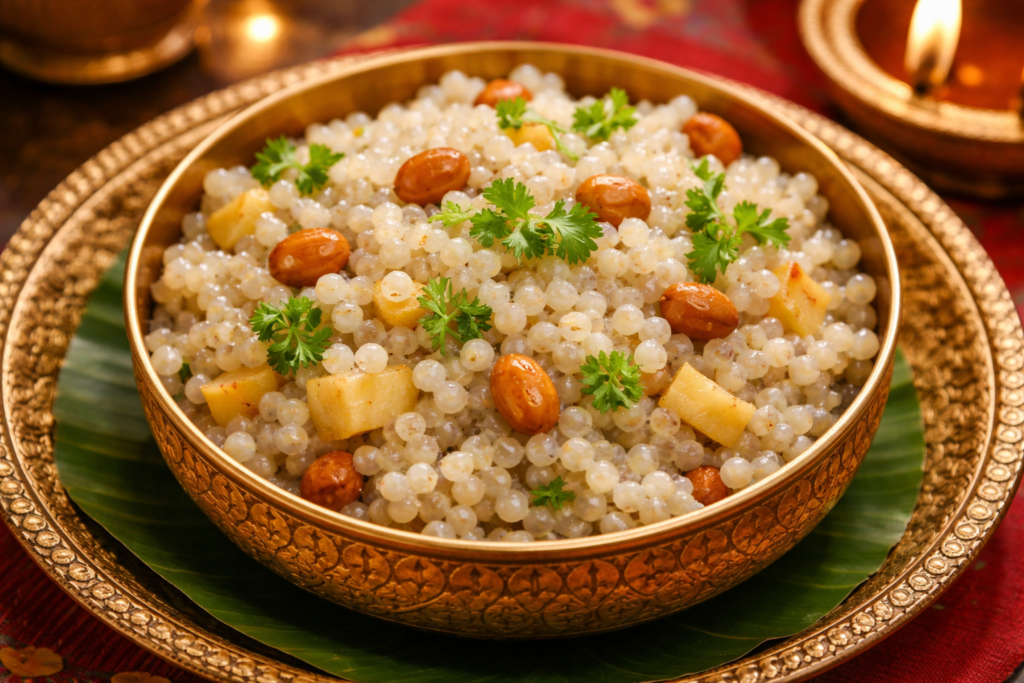
Several delicious Navratri vrat recipes are prepared during the festival.
Sabudana Khichdi
This is one of the most popular fasting dishes made with sabudana, peanuts, and potatoes.
It is light, nutritious, and easy to digest.
Kuttu Poori
Kuttu flour is used to make crispy poori served with potato curry.
Singhara Halwa
This sweet dish is prepared with water chestnut flour, ghee, and sugar.
Sabudana Vada
Sabudana vada is a crispy snack made with tapioca pearls and peanuts.
Rajgira Paratha
Rajgira flour is used to make healthy fasting parathas.
Navratri Fasting Rules for Women
Many women observe Navratri fasting for the well-being of their families.
Following proper Navratri fasting rules for women helps maintain both spiritual discipline and physical health.
Some important tips include:
consuming enough fruits and fluids
avoiding long gaps between meals
getting adequate rest
maintaining balanced nutrition
Women who are pregnant or have health conditions should consult a doctor before observing strict fasts.
Navratri Fasting Rules for Health
Following Navratri fasting rules for health ensures that fasting remains safe and beneficial.
Here are some important guidelines:
Do Not Skip Hydration
Dehydration can lead to weakness and headaches.
Avoid Overeating Fried Foods
While fasting foods may include fried dishes, moderation is important.
Include Natural Foods
Fresh fruits and nuts are healthier than packaged fasting snacks.
Navratri Fasting Benefits Ayurveda
According to Ayurveda, Navratri fasting provides several health benefits.
These seasonal fasting practices help balance the body’s internal systems.
Important Navratri fasting benefits Ayurveda include:
Detoxification
Fasting allows the digestive system to rest and remove toxins.
Improved Metabolism
Light foods help improve digestion and metabolism.
Mental Clarity
Satvik food promotes calmness and focus.
Seasonal Balance
Navratri occurs during seasonal transitions, making fasting beneficial for adapting to environmental changes.
Spiritual Benefits of Navratri Fasting
Navratri fasting also has deep spiritual significance.
It helps devotees:
develop discipline
reduce attachment to material comforts
focus on prayer and meditation
strengthen spiritual awareness
By following Navratri fasting rules, devotees aim to purify both body and mind.
Tips for Maintaining Energy During Navratri Fast
Many people feel tired during fasting if they do not follow the right diet.
Here are some tips to maintain energy:
eat fruits regularly
include nuts and dairy products
drink coconut water
sleep well
avoid excessive physical exertion
Following these tips ensures a healthy Navratri fasting diet.
Conclusion
Navratri fasting is a sacred practice that combines spirituality, discipline, and health benefits. By following the proper Navratri fasting rules, devotees can maintain a balanced lifestyle while focusing on devotion and inner purification.
Understanding the foods allowed during Navratri fast and the foods to avoid during Navratri helps maintain the purity of the fast.
A balanced Navratri fasting diet, along with traditional Navratri vrat recipes, ensures that the body remains energized throughout the festival.
Additionally, the Navratri fasting benefits according to Ayurveda highlight how this ancient tradition supports detoxification, digestion, and overall well-being.
As devotees observe the nine sacred days of Navratri, they not only seek blessings from Goddess Durga but also experience physical and spiritual renewal.
May this Navratri bring health, prosperity, and inner peace to everyone.
Jai Mata Di.