
Was Narakasura merely a demon from Hindu mythology, or does he still exist within us in different forms? Chhoti Diwali is not just a festival of lighting lamps; it is also an invitation to look within ourselves, recognize our inner darkness and overcome it.
Table of Contents
ToggleWhom Do We Really Need to Defeat?
Whenever Diwali approaches, our hearts fill with joy, excitement and enthusiasm. Beautifully decorated homes, rows of glowing earthen lamps, colourful rangolis, traditional sweets and family celebrations create an atmosphere of happiness and togetherness.
However, the day before the main Diwali celebration, we observe Chhoti Diwali, also known as Naraka Chaturdashi. Beyond its religious and cultural traditions, this festival carries a profound spiritual message that deserves our attention.
That message is simple yet powerful:
We must conquer the Narakasura within ourselves.
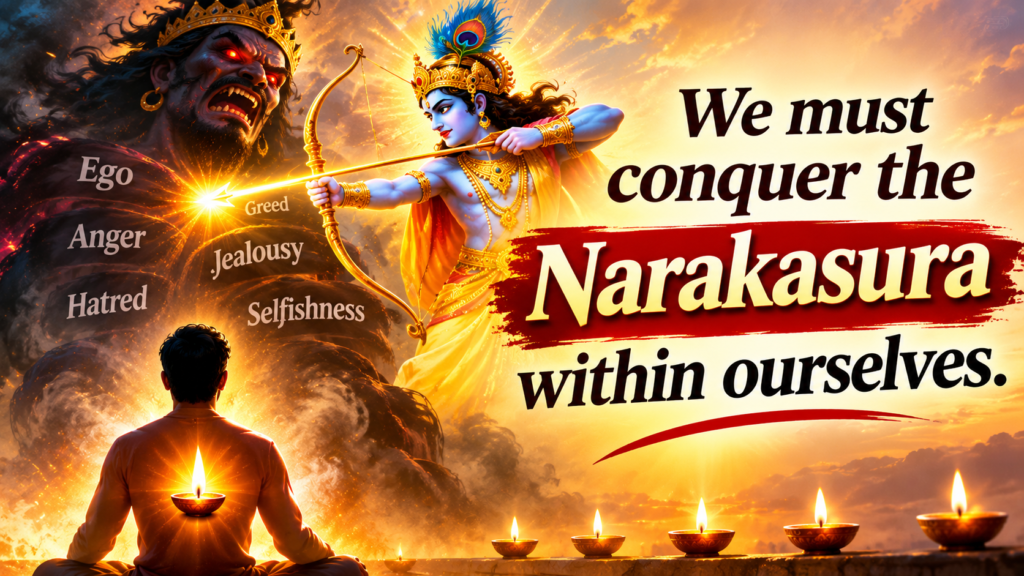
According to Hindu mythology, Lord Krishna defeated the demon king Narakasura and liberated people from his oppression. This victory is remembered as the triumph of righteousness over evil.
But have we ever considered whether Narakasura existed only in ancient mythology?
Could he also represent something within human nature?
Perhaps the most dangerous form of Narakasura is not outside us but hidden within our own thoughts, emotions, desires, ego and behaviour.
He appears whenever we allow arrogance to dominate humility, greed to overcome contentment, hatred to replace compassion and selfishness to overpower humanity.
Chhoti Diwali offers us an opportunity to recognize this inner darkness and begin the journey towards self-transformation.
The Story of Narakasura: When Power Turns into Arrogance
According to Hindu Puranic traditions, Narakasura was a powerful demon king who ruled Pragjyotishapura. Different religious texts and regional traditions describe certain aspects of his birth and life differently.
He is generally remembered as an arrogant and oppressive ruler who misused his extraordinary powers.
As his pride and arrogance increased, he began troubling the gods, capturing people and committing numerous atrocities.
His power, which could have been used for the welfare of others, became an instrument of oppression and exploitation.
When his atrocities reached unbearable proportions, Lord Krishna defeated him. Goddess Satyabhama also plays an important role in several traditional accounts of this episode.
The central message of this story is timeless:
Power is meaningful not because of how much we possess, but because of how responsibly we use it.
The same principle applies to modern human life.
Whether we possess wealth, knowledge, authority, professional status or social influence, these are meaningful only when used responsibly.
When power becomes a means of controlling, humiliating or exploiting others, it begins to destroy the very values that make us human.
How Does Narakasura Take Birth Within Us?
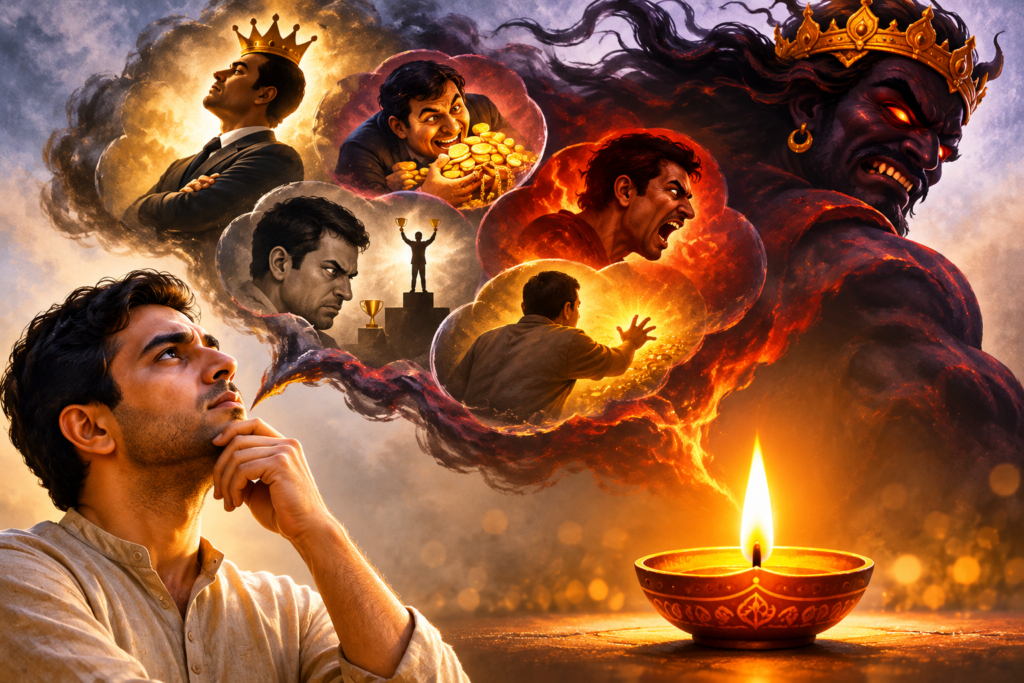
No human being is born evil. Every person has the potential for love, compassion, kindness, wisdom and understanding.
However, circumstances, uncontrolled desires, insecurity and repeated wrong choices can gradually influence our personality.
Narakasura can be understood as a symbol of this transformation.
When we begin to consider our desires more important than everything else, when we stop recognizing the pain of others, when we remember our rights but forget our responsibilities, we begin creating an inner world of darkness.
This darkness does not exist in any geographical location. It develops within human consciousness.
Interestingly, we are often very good at identifying the weaknesses of others.
We easily notice another person’s arrogance, anger, greed and jealousy. Yet we rarely examine these same tendencies within ourselves.
We call our anger self-respect.
We call our arrogance confidence.
We call our greed ambition.
We call our jealousy competition.
We sometimes even consider our desire to control others an expression of authority.
This is how the Narakasura within us gradually becomes stronger.
Self-awareness is therefore the first step towards defeating our inner demons.
Ego: The First Face of Narakasura
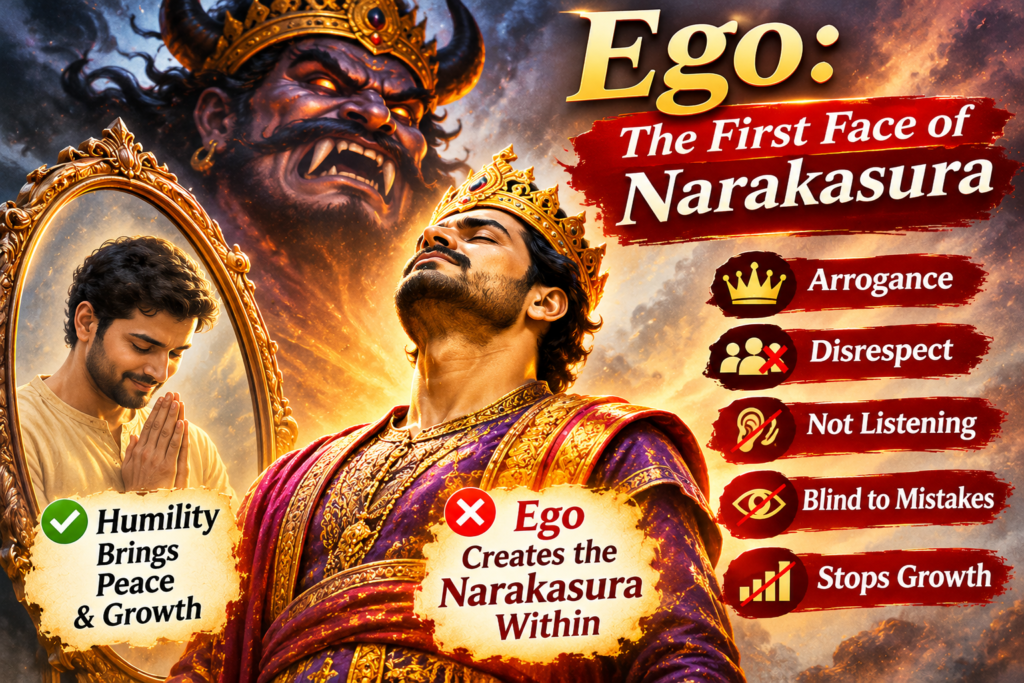
Ego is one of the major obstacles to personal and spiritual growth.
It gradually weakens our ability to think objectively, accept criticism and learn from others.
When someone begins believing that they are always right, more intelligent than everyone else and superior to those around them, their personal growth begins to stagnate.
Ego prevents us from recognizing our own weaknesses.
We take credit for our achievements but blame others for our failures. We expect respect but sometimes forget to respect others.
Within families, ego damages relationships. In workplaces, it destroys cooperation. In society, it creates discrimination, conflict and unnecessary divisions.
Sometimes people consider themselves superior because of their wealth, education, position, social influence or experience.
But true greatness does not come from making others feel inferior.
It comes from developing a personality that has enough humility to respect everyone.
Chhoti Diwali reminds us that conquering ego is an important part of conquering the Narakasura within.
Greed: When Nothing Is Ever Enough

Human needs may be limited, but desires can become endless.
There is nothing wrong with wanting a better life, earning money, providing comfort to our families, building a successful business or earning recognition through hard work.
The problem begins when wealth and success become the only purposes of life.
When someone sacrifices honesty for profit, exploits others for personal gain or becomes incapable of feeling satisfied with what they have, greed begins controlling their judgment.
We see examples of this everywhere.
Some businesses use dishonest practices to increase profits. Some employers exploit their workers. Some individuals misuse other people’s trust for financial benefit. In many places, personal greed contributes to environmental destruction.
The important question is not how much wealth we possess.
The more important question is:
How much humanity have we sacrificed in the process of acquiring it?
True prosperity should bring dignity, security and well-being, not exploitation and suffering.
Chhoti Diwali inspires us to examine our desires and develop a healthy balance between ambition and contentment.
Anger and Revenge: Enemies of Inner Peace
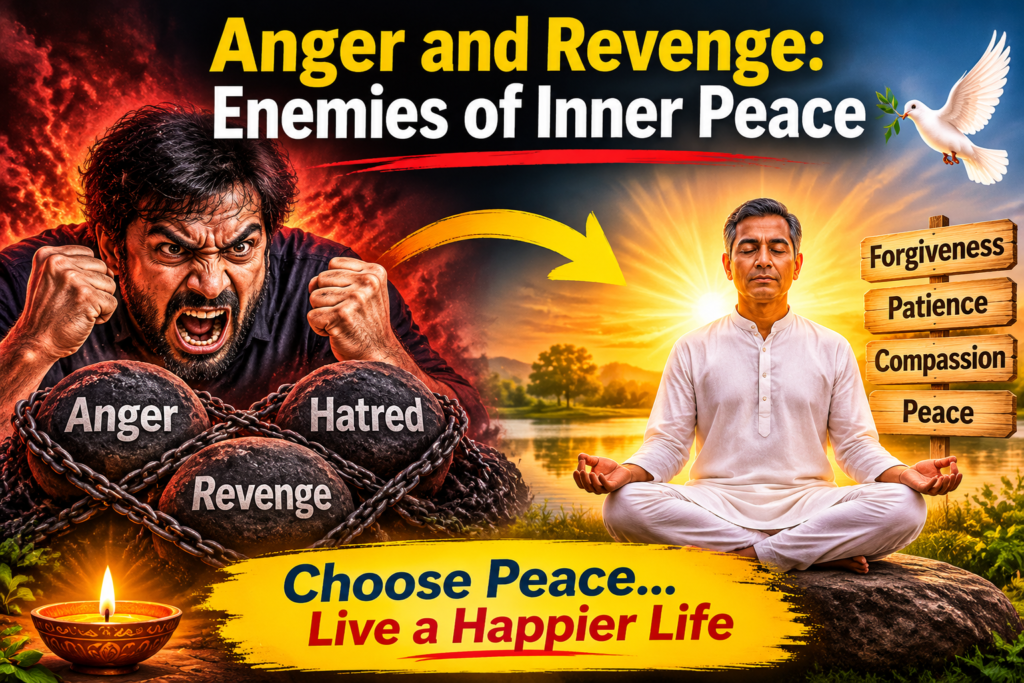
Anger is a natural human emotion. Feeling angry in the face of injustice is not necessarily wrong.
However, when anger destroys our ability to think clearly and revenge becomes the purpose of our lives, it becomes destructive.
Sometimes we remember an unpleasant remark for years. We continue carrying resentment towards someone because of an incident that happened long ago.
The other person may have forgotten the incident, but we keep revisiting it in our minds.
In this way, we become prisoners of our own negative emotions.
Revenge often takes away the peace of the person who carries it.
Forgiveness does not mean accepting injustice or allowing others to exploit us. It means refusing to let hatred permanently control our minds.
We must oppose injustice, establish healthy boundaries and take appropriate action whenever necessary.
But we should not allow hatred to become a permanent resident of our hearts.
Overcoming anger through wisdom and patience is another form of defeating the Narakasura within.
Jealousy: Being Troubled by Someone Else's Light

Diwali teaches us to celebrate the lights shining in other people’s homes.
Yet human nature sometimes presents a contradiction.
We want our own lives to shine, but we become uncomfortable when others achieve success.
Someone else’s achievement makes us insecure rather than inspired. Another person’s appreciation makes us feel neglected. We sometimes criticize successful people instead of recognizing their dedication and hard work.
This is jealousy.
Jealousy prevents us from concentrating on our own development. We become so occupied with comparing our lives with others that we forget to recognize our own potential.
Remember:
Another person’s lamp does not reduce the light in your home.
We should learn to appreciate the success of others and use it as inspiration.
Our real competition should not be with another individual but with our own limitations and yesterday’s version of ourselves.
Power and Authority: The Modern Form of Narakasura
One of the most relevant lessons from the story of Narakasura concerns the misuse of power and authority.
Today, power does not exist only in the hands of kings or political rulers.
It exists in families, workplaces, educational institutions, businesses and society.
Parents have authority over certain family decisions. Managers have administrative powers. Business owners control resources. Socially influential individuals can affect the lives of others.
But authority is not a licence to dominate people.
A parent who constantly imposes personal wishes without understanding a child’s feelings may misuse parental authority.
An official who uses their position to harass ordinary people misuses administrative power.
A business owner who treats employees merely as instruments for generating profit forgets their human responsibilities.
An educated person who uses knowledge to humiliate others fails to understand the true purpose of education.
Power should protect, support and empower others.
It should never become an instrument of oppression.
This is why Narakasura is not merely a character from mythology. His story also serves as a warning against the misuse of authority in modern society.
Lord Krishna's Message: Victory Within Before Victory Outside
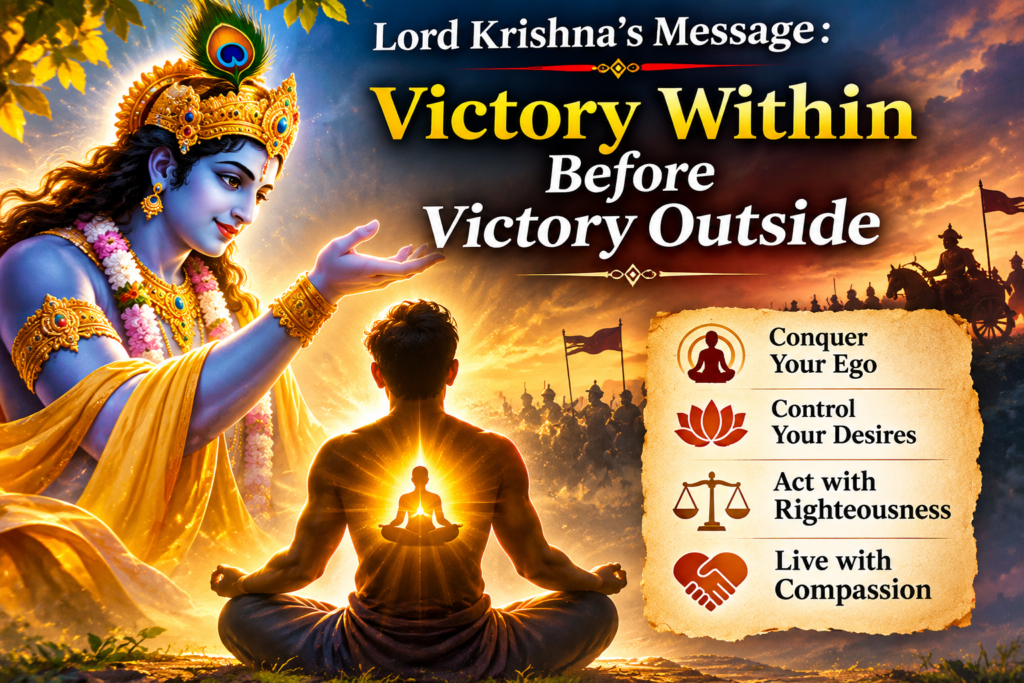
The life and teachings of Lord Krishna extend far beyond stories of battles and victories.
His message encompasses duty, wisdom, righteousness, self-control and balance.
In the Bhagavad Gita, Lord Krishna guides Arjuna to overcome confusion, attachment and emotional weakness and perform his duty with wisdom and determination.
From this perspective, the defeat of Narakasura can be understood as a symbolic reminder of the struggle between good and evil within human nature.
Every day, we face choices.
Wisdom encourages us to follow the right path, while selfishness tempts us towards easier but dishonest alternatives.
Compassion inspires us to help others, while ego encourages us to think only about ourselves.
Truth demands courage, while personal gain sometimes tempts us to lie.
In these moments, we must awaken the Krishna within us—the inner voice of wisdom, conscience, righteousness and discernment.
Victory in the external world may bring recognition and material success.
But victory over our own weaknesses brings something far more valuable: inner peace and personal transformation.
Chhoti Dipawali: More Than Lighting Lamps
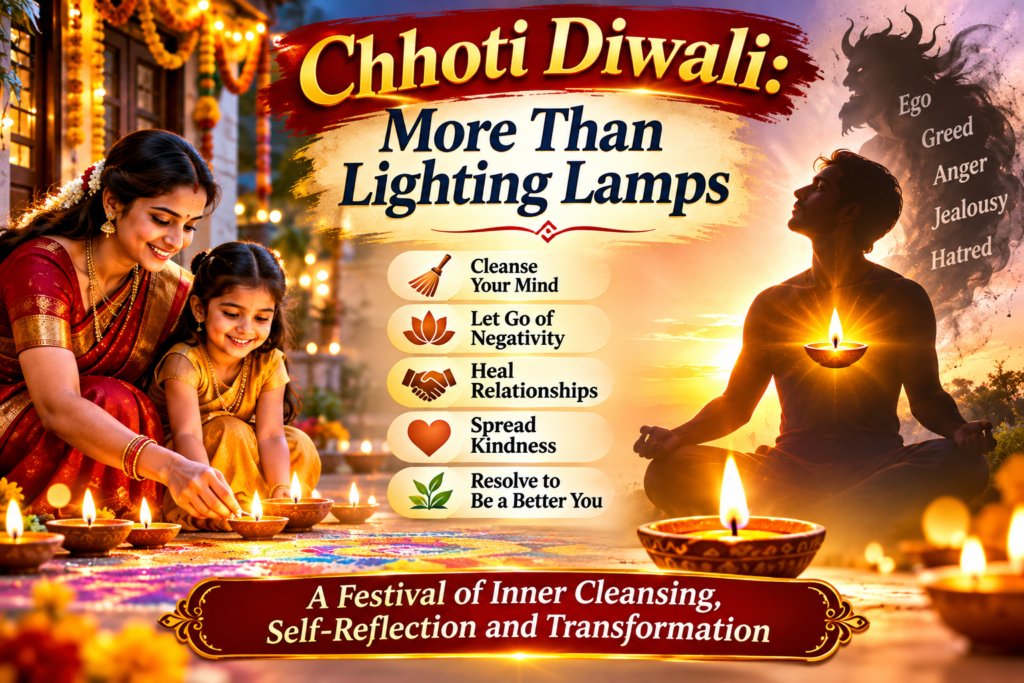
Lighting earthen lamps is a beautiful and meaningful tradition of Chhoti Diwali.
The gentle glow of a diya creates an atmosphere of peace, devotion and happiness. It reminds us that even a small flame can illuminate surrounding darkness.
But an important question deserves our attention:
Can lighting hundreds of lamps inside our homes remove the darkness from our lives if our hearts remain filled with hatred and jealousy?
If a house is beautifully decorated but family members do not respect one another, is it truly illuminated?
If we worship God but remain dishonest in our dealings, have we understood the deeper meaning of devotion?
If we send festive greetings to everyone but secretly carry hatred and resentment, are we celebrating the true spirit of Diwali?
The light of a lamp becomes meaningful when its message is reflected in our behaviour.
Helping someone in need, comforting a distressed person, apologizing for our mistakes, resolving old disagreements and respecting the rights of others are also ways of spreading light.
Therefore, Chhoti Diwali should inspire us not only to clean and decorate our homes but also to purify our thoughts and actions.
How Can We Defeat the Narakasura Within?
Recognizing our weaknesses is important, but transformation requires consistent effort.
We do not necessarily need complicated rituals or extraordinary achievements to begin this journey.
A few simple practices can make a meaningful difference.
- Practise Self-Reflection
Spend a few minutes every day examining your actions.
Did I hurt someone unnecessarily today? Was I jealous of another person’s success? Did I behave arrogantly? Did I choose personal benefit over fairness?
Honest questions create opportunities for improvement.
- Accept Your Mistakes
Accepting mistakes is not a sign of weakness. It reflects maturity and confidence.
We cannot correct what we refuse to acknowledge.
- Control Anger Through Patience
Not every situation requires an immediate response. Sometimes remaining silent for a few moments can prevent unnecessary conflict.
- Develop Compassion
Try to understand other people’s circumstances before judging their behaviour.
Compassion does not mean supporting wrongdoing. It means preserving humanity while standing against injustice.
- Balance Ambition with Contentment
Work towards your goals, but do not allow endless desires to control your life.
Success becomes meaningful when it is accompanied by peace, honesty and satisfaction.
- Respect Responsibilities Along with Rights
Our responsibilities towards family, society, colleagues and fellow human beings are as important as our individual rights.
A responsible person understands that personal freedom should not become an excuse to violate the freedom of others.
- Perform One Good Deed Every Day
Help someone, encourage a struggling person, listen patiently or bring a smile to someone’s face.
Small acts of kindness gradually transform our personality.
Why the Message of Narakasura Is Relevant Today
Humanity has made extraordinary progress in science, technology, communication and economic development.
We have access to information, modern facilities and opportunities that earlier generations could hardly imagine.
Yet an important question remains:
Has our inner development progressed at the same pace as our external development?
We have countless digital platforms to communicate with one another, but are we becoming better at understanding each other’s emotions?
We have more material resources, but have we developed greater contentment?
We have become more educated, but have we also become more patient, humble and compassionate?
Our voices can reach millions of people through technology, but are we equally willing to listen to the suffering of one person sitting beside us?
These questions are relevant to individuals, families and society as a whole.
External development alone cannot create a truly harmonious society.
Unless we recognize and overcome the negative tendencies within ourselves, progress will remain incomplete.
We still need to defeat Narakasura—not by fighting another human being, but by overcoming the darkness within our own minds.
Conclusion: Light a Lamp Within Yourself
Chhoti Diwali gives us a beautiful opportunity to reflect on our past, acknowledge our mistakes and make better resolutions for the future.
The story of Narakasura reminds us that arrogance, oppression and the misuse of power ultimately lead towards destruction.
But its deeper symbolic message is equally important:
We must fight not only against injustice and wrongdoing in the external world but also against the negative tendencies within ourselves.
Every year, we light lamps to celebrate Diwali.
This year, let us also light a lamp within our hearts.
A lamp of humility to overcome arrogance.
A lamp of contentment to overcome greed.
A lamp of goodwill to overcome jealousy.
A lamp of patience to overcome anger.
A lamp of love to overcome hatred.
And a lamp of service to overcome selfishness.
Because the true spirit of Diwali is not limited to illuminating our homes. It is also about illuminating our thoughts, actions and consciousness.
We must remember that darkness does not disappear simply because we criticize it. We must light a lamp.
Similarly, society does not become better merely because we criticize its weaknesses. Meaningful change begins when we take responsibility for transforming ourselves.
Perhaps this is the most beautiful message of Chhoti Diwali:
Do not search for Narakasura only in ancient stories. Look within yourself and recognize the forms in which he may still exist.
When we conquer the Narakasura within ourselves, we take the first real step towards a life filled with wisdom, compassion, peace and light.
This Chhoti Diwali, let us make a promise to ourselves:
We will recognize our inner darkness, acknowledge our weaknesses and sincerely work towards becoming better human beings.
Happy Chhoti Diwali! May the light of wisdom, goodness and compassion illuminate every heart.
Light is not meant to shine only through lamps; it must also shine through our thoughts and actions.
— Ranjit Disha
Thoughts, Culture & Philosophy of Life